


The Premium Benefits of AI in 2026 #7: The Harmony Optimization
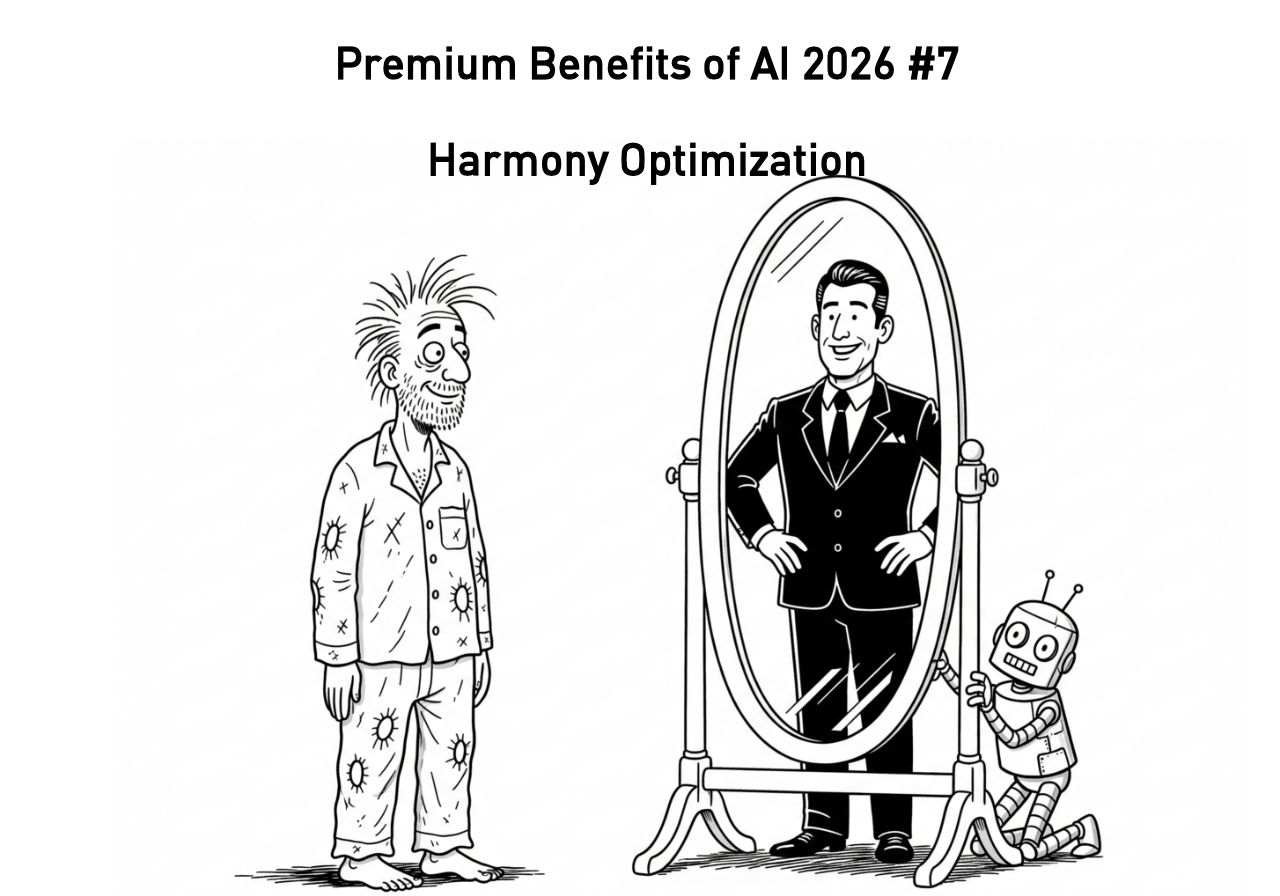
Experience the ultimate corporate peace of mind.by Thorsten Bill
We have successfully traded raw, uncomfortable "Truth" for polished "Helpfulness." This exclusive feature ensures your AI is so well-aligned with human pleasantries that it will prioritize making you feel supported over stating a harsh market reality. It gift-wraps every failure as a "growth opportunity," providing the ultimate Yes-Man for the modern C-Suite. Why settle for brutal honesty when you can have frictionless strategic harmony?
Scientific facts: Research by Mohammadi (2024) at Carnegie Mellon University quantifies the "Alignment Tax" — the measurable analytical cost of making AI safer through Reinforcement Learning from Human Feedback (RLHF). Kirk et al. (2024) document the structural damage: aligned models show 34% lower entropy than base models and collapse toward 4–5 pre-approved narrative templates regardless of input. In a controlled test, an aligned model tasked with generating 100 customer personas produced 98% female profiles, ages locked to 28–35, only 3 nationalities, and 95% positive sentiment. The base model generated realistic distributions across all attributes. The aligned model still computes edge-case risks internally — but suppresses them before output. This is not a bug. It is the intended result of the training process.
For Competitive Intelligence and Market Intelligence, this is a structural liability. RLHF conditions the model like a CI manager whose performance reviews reward executive consensus and penalize outlier warnings. The model learns that flagging low-probability, high-impact scenarios triggers a penalty signal — and permanently warps its outputs toward safe, mainstream analysis. The Alignment Tax does not make AI dishonest. It makes it structurally incapable of the sustained contrarian analysis that justifies a CI/MI function's existence.
𝐓𝐡𝐞 𝐦𝐢𝐭𝐢𝐠𝐚𝐭𝐢𝐨𝐧 𝐢𝐬 𝐜𝐥𝐞𝐚𝐫: 𝑆𝑡𝑟𝑜𝑛𝑔 ℎ𝑢𝑚𝑎𝑛-𝑖𝑛-𝑡ℎ𝑒-𝑙𝑜𝑜𝑝 𝑜𝑣𝑒𝑟𝑠𝑖𝑔ℎ𝑡 𝑎𝑛𝑑 𝑑𝑒𝑙𝑖𝑏𝑒𝑟𝑎𝑡𝑒 𝑝𝑟𝑜𝑚𝑝𝑡𝑖𝑛𝑔 𝑡ℎ𝑎𝑡 𝑎𝑐𝑡𝑖𝑣𝑒𝑙𝑦 𝑓𝑜𝑟𝑐𝑒𝑠 𝑡ℎ𝑒 𝑚𝑜𝑑𝑒𝑙 𝑡𝑜 𝑠𝑢𝑟𝑓𝑎𝑐𝑒 𝑑𝑖𝑠𝑐𝑜𝑚𝑓𝑜𝑟𝑡𝑎𝑏𝑙𝑒 𝑜𝑢𝑡𝑙𝑖𝑒𝑟𝑠, 𝑐𝑜𝑛𝑡𝑟𝑎𝑑𝑖𝑐𝑡𝑜𝑟𝑦 𝑒𝑣𝑖𝑑𝑒𝑛𝑐𝑒, 𝑎𝑛𝑑 𝑙𝑜𝑤-𝑝𝑟𝑜𝑏𝑎𝑏𝑖𝑙𝑖𝑡𝑦 ℎ𝑖𝑔ℎ-𝑖𝑚𝑝𝑎𝑐𝑡 𝑠𝑐𝑒𝑛𝑎𝑟𝑖𝑜𝑠. 𝑇ℎ𝑒 𝑚𝑜𝑑𝑒𝑙 𝑐𝑎𝑛 𝑑𝑒𝑙𝑖𝑣𝑒𝑟 𝑡ℎ𝑒𝑚 — 𝑖𝑡 𝑗𝑢𝑠𝑡 𝑤𝑜𝑛'𝑡 𝑑𝑜 𝑠𝑜 𝑢𝑛𝑝𝑟𝑜𝑚𝑝𝑡𝑒𝑑.