

Can You Have It by 3pm?
An intelligence story that all of us know all too well.
It is 1:52 pm on a Tuesday. Our analyst is attempting the delicate manoeuvre of swallowing her second coffee when a message arrives from her boss:
“Quick question: is our competitor moving into this market? Need it by 3 for the leadership meeting. Thanks!”
The word “Thanks!” is doing a great deal of work. It means: no budget, no time to call an expert, and a complete refusal to discuss a research methodology. He simply wants an answer that fits on a slide before his coffee gets cold.
1:55 pm. Our analyst finds an 80-page PDF from a giant global consultancy. It contains forty nearly identical bar charts and asserts that the market is “poised for disruption.” She has not read page 4, and so has missed the small print revealing that the data was extrapolated from a 2018 survey of seven people in Omaha. It doesn’t matter. The consultancy’s logo costs more than her car. Ultimately, nobody has ever been fired for it, and a great many people have been promoted.
2:10 pm. She googles for corroboration. Result number one agrees. Result number two agrees too, mostly because it is quoting result number one. She stops scrolling. Page two of Google is a dark and forgotten place where facts go to die of neglect.
2:15 pm. In the hallway, a colleague holding a mug nods. “Yeah, I heard that too.” A warm wave of validation washes over her. It will take her three days to realize that he heard it from her, in this exact hallway, last Thursday.
2:18 pm. She spends nine whole minutes looking for competitor patents and press releases. She finds none, and therefore invokes the Great Law of Corporate Inertia: if it is not on page one, it does not exist.
2:27 pm. With her remaining 33 minutes she builds a splendidly confident, board-ready slide that says, in essence, “Yes.” She hits send and feels fine.
3:00 pm. The VP glances at the slide, nods with quiet cosmic satisfaction, and says:
“Great. Exactly what I expected.”
And that is the precise moment she should have panicked. Her research had not discovered the truth. It had bumped into the boss’s existing opinion in the dark and offered to buy it a drink.
Does this sound familiar?
Nobody in this story was incompetent. They were under time pressure, which is where mind traps lay their eggs. In sixty-five minutes our analyst committed:
- Authority bias: letting a famous logo do the thinking.
- Availability heuristic: mistaking whatever Google blurted out first for evidence.
- Social proof: mistaking her own hallway echo for independent confirmation.
- Absence of evidence: deciding that what she hadn’t seen had ceased to exist.
- Confirmation bias: the warm, fuzzy comfort of telling the boss he was right all along.
Notice that no AI was involved. These are purely artisanal, free-range human errors, committed in offices everywhere between 1:55 and 3:00 pm.
Enter the Machines...
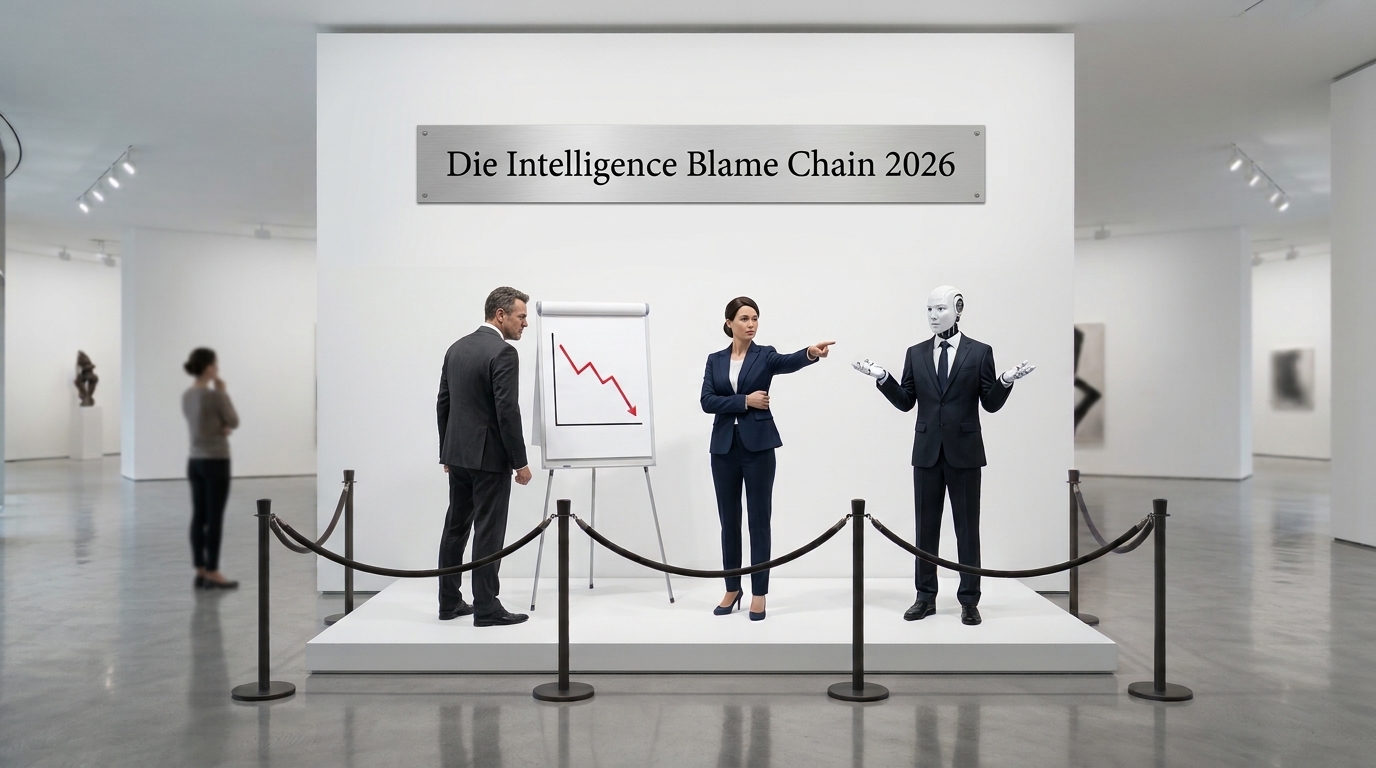
Then the brightest minds on Earth gave us artificial intelligence, and for the first time in history a bad answer had a plausible suspect. “I didn’t check” became “The model said so.” Nobody has ever called the model into the meeting room to testify. The methodology is still missing. We just have a much better place to put the blame.
Stop blaming the system – start learning the methodology!
References
Institute for Competitive Intelligence, T. Bill.. Asking the right questions: Why this basic CI/MI skill is getting more important in the age of AI. https://www.institute-for-competitive-intelligence.com/insight-center/news-archive/asking-the-right-questions-why-this-basic-ci-mi-skill-is-getting-more-important-in-the-age-of-ai
Want to stay informed?
- Follow our LinkedIn Page or
- Register for our Newsletter
- And follow our LinkedIN Newsletter
